
By Wallace Mawire
HARARE — The Cultural Section of the Iranian Embassy in Harare has released a report on the recent ceasefire and negotiations between Iran and the United States, arguing that U.S. military power has long fostered an “illusion of superiority” among American officials.
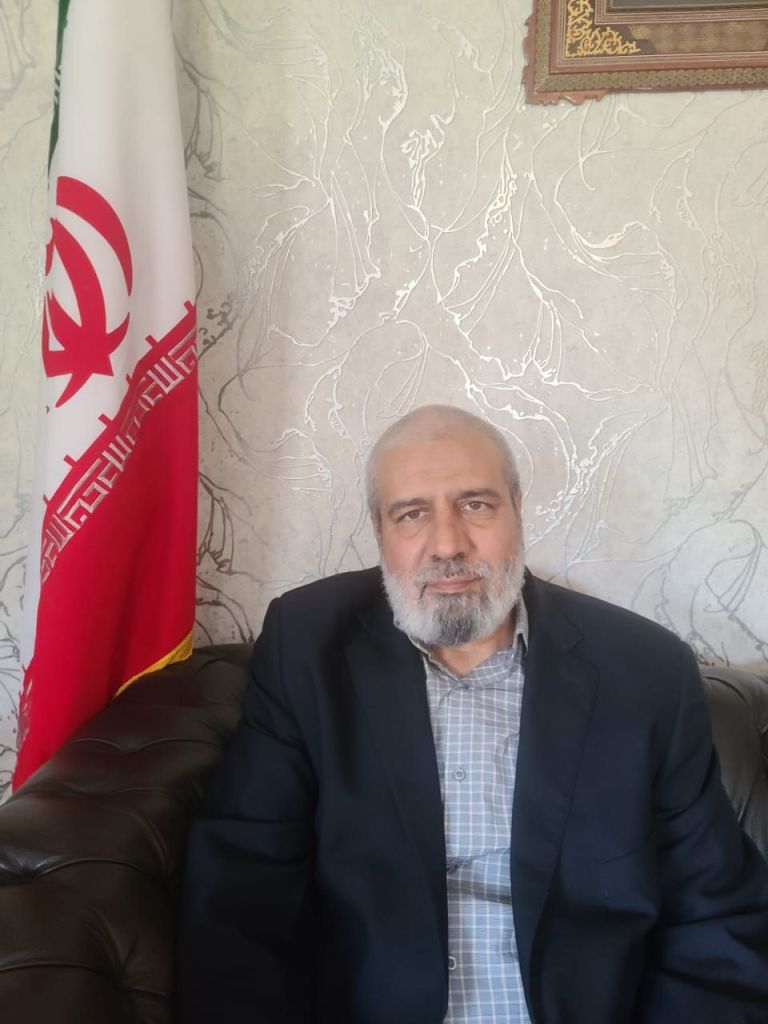
The report was compiled by Dr. Ahmad Ghane, Cultural Counselor of the Islamic Republic of Iran in Zimbabwe.
According to the report, years of U.S. military intervention have repeatedly ended in failure despite billions of dollars spent. It cites U.S. withdrawals from Vietnam, Afghanistan, Iraq, and Yemen as examples, and expresses hope that the recent confrontation with Iran will lead to the removal of U.S. forces from West Asia.
The document states that during recent negotiations, the U.S. approached Iran with “excessive demands” rooted in a belief of superior power, which ultimately caused the talks to collapse without an agreement. The report links this behavior to what the Holy Quran describes as greed — a trait associated with Hell: “The Day We will say to Hell, ‘Have you been filled?’ and it will say, ‘Is there any more?’”
The report describes Iran’s response in the recent conflict as a turning point, crediting “the eternal power of God, the wise leadership of the Vali-ye Faqih, the support of the faithful and revolutionary people, the presence of citizens in the streets, and the heroic role of the armed forces.” It also highlights the participation of nearly 30 million Iranians in the Jan-fada (Life-Sacrificer) campaign. “The era of the world’s bullies has come to an end,” it concludes.
On International Institutions and Media
The Embassy asserts that international bodies such as the United Nations and the Security Council have failed to protect the oppressed and have instead supported aggressors. It alleges that the International Atomic Energy Agency shared information with Israel during the conflict, which was used in the assassination of Iranian officials and scientists.
Citing the Quran, the report urges the oppressed to strengthen themselves scientifically, economically, militarily, and politically rather than submitting to bullies: “And prepare against them whatever you are able of power and of steeds of war by which you may terrify the enemy of Allah and your enemy.”
It also warns against misinformation, referencing the Quranic verse: “O you who have believed, if there comes to you a disobedient one with information, investigate.”_The report claims most global media outlets operate under U.S. and Zionist influence and do not report events accurately.
On Regional Conflict and Unity
The Embassy states that Iran’s retaliatory strikes on U.S. bases during the 40-day conflict were a legitimate response to attacks launched from those sites. It emphasizes that Iran did not target neighboring countries and continues to maintain friendly relations with them, while calling for the removal of U.S. military bases that it says undermine regional stability.
The report frames the 40-day war as an extension of Israel’s ongoing operations in Palestine, Gaza, Lebanon, and Syria. It praises Iran’s support for the people of Gaza, noting that sectarian differences between Sunni and Shia do not affect its stance. The document quotes the Prophet Muhammad (PBUH): _“If someone from anywhere in the world cries out in oppression and asks for your help, you must help him.”_ It further points to the role of Shia-majority countries in resisting Israel as a lesson against sectarian division, citing the Quranic call: _“And hold firmly to the rope of Allah all together and do not become divided.”_
*On Global Response and Accountability*
The Embassy thanks organizations, scholars, and individuals who condemned the actions of the U.S. and Israel, stating that remaining silent in the face of injustice amounts to complicity. It notes that several European countries chose not to join the U.S. in the Persian Gulf conflict, though it attributes this to economic self-interest rather than moral opposition.
The report also references a failed U.S. operation in Isfahan, likening it to the 1980 Tabas incident, and claims divine intervention prevented the mission’s success. It warns that while the current situation is neither full war nor peace, Iranian forces remain ready: “Maintain your weapons and shields and be wary of the trickery and deception of the enemies.”
The document praises Supreme Leader Ayatollah Khamenei for predicting that any conflict would escalate into a regional war, describing him as a vigilant and insightful leader. It reaffirms Iran’s anti-arrogance stance as a permanent principle: “The struggle against the devil has no end, but we have never started a war. However, whenever the enemy starts a war, they will receive a crushing response.”
The Embassy concludes by seeking the downfall of what it calls “the world’s arrogant and bullies” and praying for the health and success of Supreme Leader Ayatollah Sayyid Mujtaba Khamenei. “Amen, Lord of the Worlds.”
 News Sport Online