
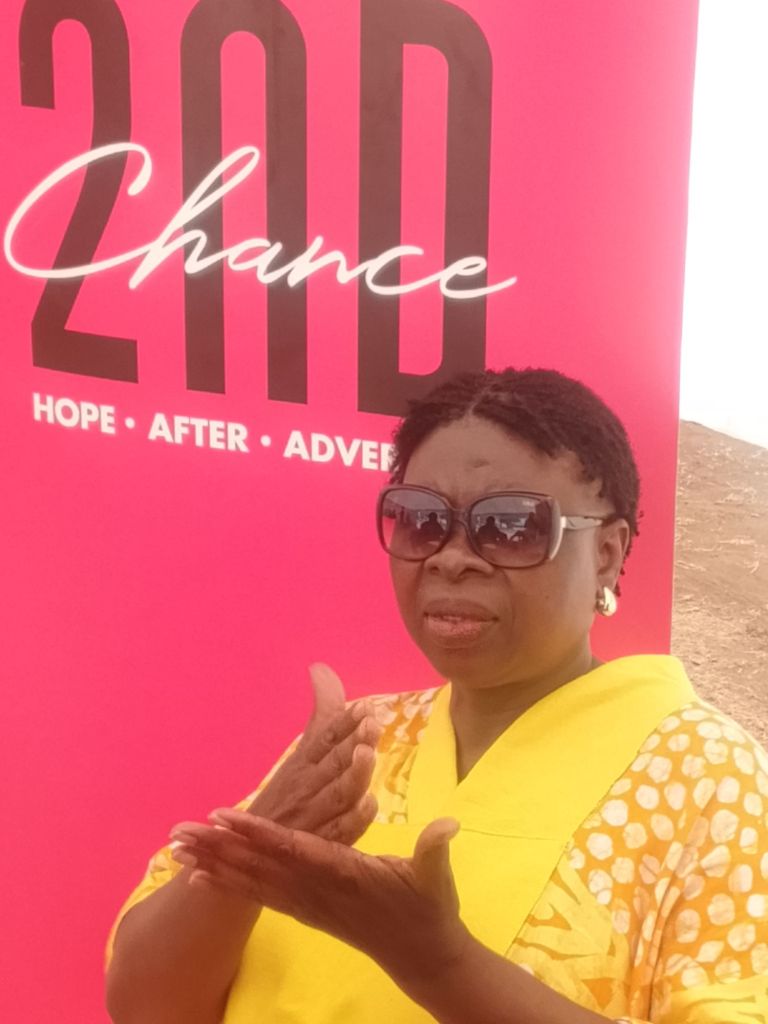
Cancerserve, Miracle Mission Vimba and Second Chance Trust call for early detection and psychosocial support
MOUNT DARWIN – Last Friday, Cancerserve, Miracle Mission Vimba and other healthcare partners descended on Karanda Mission Hospital for a cancer awareness and treatment outreach, bringing screening, treatment and counseling services to communities in Mashonaland Central.
The media interviewed cancer survivors from Second Chance Trust, an organization that provides psychosocial support to cancer patients and their families.
Speaking at the outreach, Kathy Chikowe, Director of Second Chance Trust, said the organization was born out of her own cancer journey.
“Second Chance Trust was launched in November 2019. This was after I had gone through cancer. I was diagnosed in 2017, and I became a survivor in August this year. I’m turning nine years from diagnosis. When I was sick, I noticed that there was a gap in terms of psychosocial support and counseling for people that were going through cancer. As you know, when you’re diagnosed, life goes on for those people that are well. Your family, they move on. Your friends, they move on. And you are in a space where it’s you and God facing each other in the disease.”
She said Second Chance Trust complements the work of the Ministry of Health and partners like Cancerserve by addressing the emotional and spiritual needs of patients.
“When we get to Karanda, the doctors are busy wanting to do the clinic, but Second Chance offers the psychosocial support and counseling to cater for the spiritual and emotional needs of our patients. Remember, healing of patients mainly it’s in the mind. I think you heard one of the survivors talking about the power of a positive mind.”
“On the day of the actual diagnosis, I went there alone, and my doctor was like, ‘Why did you come alone?’ I said, ‘No, it was the three of us, myself, yourself, and God… the Father, the Son, and the Holy Spirit.’”
Chikowe encouraged Zimbabweans to adopt good health-seeking behaviors and urged the media to continue spreading awareness. She also highlighted funding as a major challenge for the organization.
“My encouragement to all people that get diagnosed with cancer, or their families, is cancer is not a death sentence, but it’s part of the journey of life. The challenges that we are having running the organization are finances. I am grateful to ZFM, Capital FM, Star FM, they’ve given us opportunities to be on radio with medical people and survivors to spread the word.”
Survivors: “Early detection saves lives”
Gladys Vainoza, 58, a 20-year survivor, spoke about ignoring her symptoms in 2003 and being diagnosed at stage 3 in 2006.
“I felt the lump in 2003, and I decided to ignore that because I didn’t want it to disturb my studies… When I was at home, I started to feel the growth started to grow, and it was sore. The doctor said, ‘What? We have delayed. This is not good.’”
“Early diagnosis is better because it’s less expensive. If you wait for it to be on advanced stage, it will be difficult to treat and very, very expensive. So early diagnosis is the best in life.”
Vainoza underwent surgery, chemotherapy, and radiotherapy in South Africa. She said the journey was tough due to medical bills, but she remained active during treatment. “In the ward, I was the only one who was very active. Other ladies were bedridden.”
Anastasia Rutendo Bazza, 59, was diagnosed with breast cancer in 2019.
“As soon as I was diagnosed, I had to ask my doctor for a mastectomy, so they removed the breast before I even went for the chemotherapy. I did not want to see it. I just felt it was carrying cancer.”
She completed 6 cycles of chemotherapy during COVID-19 and has been on tamoxifen for 7 years.
“During the chemotherapy, things were very difficult because, one, it was expensive. Two, it was really painful… I spent almost a year and a half. I did not go to work. It was really tough. But at the same time, I never had awareness before I was diagnosed. It was just, ‘You have got cancer.’ I just know that cancer kills.”
Reginice Gutsa, 58, diagnosed in 2006, echoed the call for screening.
“At first I didn’t even have a lump. After a biopsy, the results confirmed cancer. That day I felt like my world had ended. I cried and thought, ‘This is it, I am going to die.’ My message to other women is: Do not be afraid to go for check-ups. Early detection saves lives. Cancer is not a death sentence. With faith, family support, and proper medical care, you can overcome it.”
The Karanda outreach is part of ongoing efforts by Cancerserve and partners to decentralize cancer services. Karanda Mission Hospital has become a key rural center for cancer screening and treatment in Zimbabwe, with support from medical teams and organizations providing counseling and patient navigation. Second Chance Trust, working closely with Karanda Hospital’s Dr. Thistle and team, provides a dedicated space at outreaches for patients to receive mental health, emotional and spiritual support after seeing doctors.
 News Sport Online