
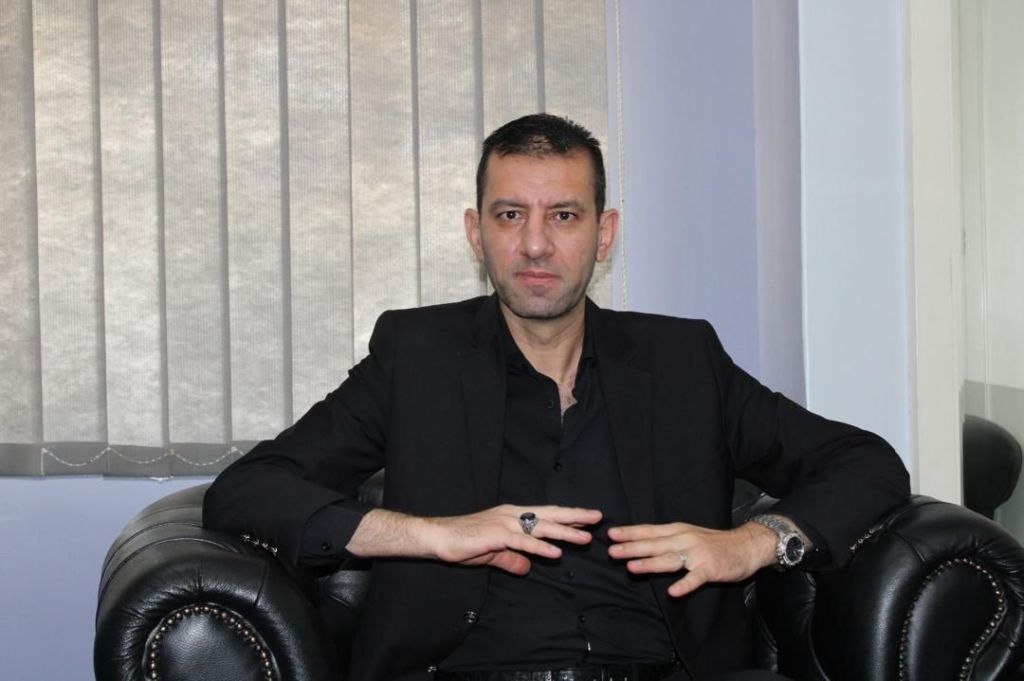
HARARE — Palestinian Ambassador to Zimbabwe, Tamer Almassri, has extended “heartfelt congratulations” to the Government and people of Zimbabwe following the country’s election to the United Nations Security Council for the 2027–2028 term.
In a statement, Almassri described the achievement, secured by an “overwhelming mandate” at the UN General Assembly, as a testament to the respect and confidence the international community has in Zimbabwe. He said Palestine is confident Zimbabwe will serve as a “powerful voice for the Global South” and continue its principled defense of international law, civilian protection, and multilateral solutions.
The State of Palestine also reaffirmed its “deep fraternal bond” with Zimbabwe, citing a shared history and common struggle for national liberation, self-determination, and justice.
Zimbabwe was elected as a non-permanent member of the 15-member Security Council on 3 June 2026 during the 80th session of the UN General Assembly in New York.
Zimbabwe ran unopposed for the African Group seat and received 182 votes out of 191 ballots cast. A candidate needs a two-thirds majority, or minimum 129 votes if all 193 members vote. Zimbabwe comfortably surpassed that threshold.
For the Africa seat, Zimbabwe was the sole candidate. It will replace Somalia, whose term ends 31 December 2026.
In other regions, there were contests: Kyrgyzstan defeated the Philippines 142-49 after four rounds for the Asia-Pacific seat. Germany lost out in the Western European & Others Group, securing 104 votes vs Portugal’s 134 and Austria’s 131.
Ahead of the vote, Zimbabwe said it had secured backing from all 54 African Union member states plus 80 other countries through “reciprocal support arrangements”. President Emmerson Mnangagwa launched the campaign under the theme “Advancing 21st Century solutions for global peace and security through multilateralism”, with SADC and the AU endorsing the bid.
This will be Zimbabwe’s third term on the Council, after serving in 1983-1984 and 1991-1992. The new members assume their seats on 1 January 2027 and serve until 31 December 2028.
The UN Security Council is considered the most powerful body of the United Nations.
It has primary responsibility for maintaining international peace and security. It’s the only UN body whose decisions are legally binding on all 193 member states. The Council can investigate disputes, impose sanctions, authorize peacekeeping operations, and in exceptional cases approve the use of force.
President Mnangagwa said the “resounding victory underscores the effectiveness of Zimbabwe’s engagement and re-engagement agenda” and shows global confidence in Zimbabwe’s leadership. As a non-permanent member, Zimbabwe will join the “A3” African bloc alongside DRC and Liberia in 2027, with expectations it will align with AU positions and emphasize AU-led responses to African conflicts.
Minister of Foreign Affairs Prof. Amon Murwira said Zimbabwe stands for “a peaceful world that respected international law, promoted peaceful coexistence between nations, and promoted diplomacy over confrontation”.
Non-permanent members don’t have veto power — that’s reserved for the P5: US, UK, France, Russia, China. But they have one vote on all resolutions and participate directly in deliberations on armed conflict, sanctions, peacekeeping, counter-terrorism, and humanitarian crises.
The seat also elevates a nation’s diplomatic profile and provides a platform for high-level diplomacy and strategic relationships.
 News Sport Online