
By Tendai Chisiri
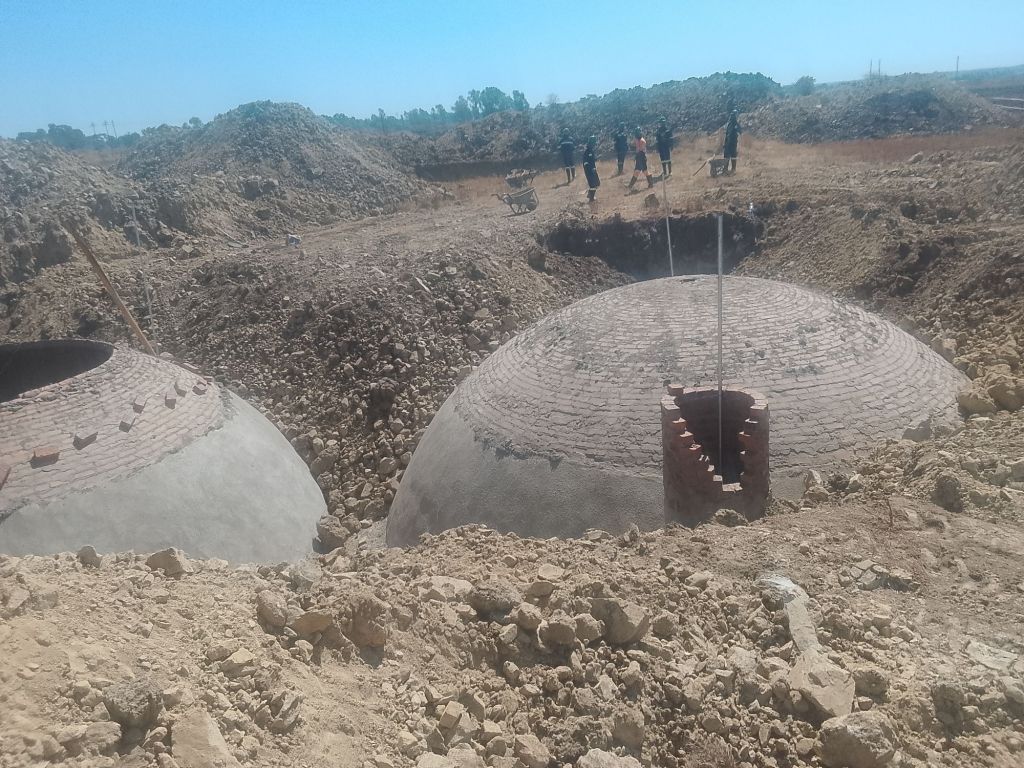
CHEGUTU – Urban Development Corporation, commonly known as UDCORP, hosted a media tour at the Knockmalloch Housing Project last Friday to unveil a bio-digester being constructed by Onyx Earth Renewables in Chegutu.
Speaking during the tour, UDCORP Chief Executive Officer Joey Shumbamhini said the State-Owned Enterprise, established through an Act of Parliament, has a mandate to spearhead urban development, housing delivery, infrastructure development, and sustainable human settlements in Zimbabwe.
“As UDCORP, we believe the future of urban development cannot be separated from environmental sustainability, innovation, and responsible infrastructure planning,” he said.
Shumbamhini announced that UDCORP has adopted modern bio-digester technology as the sewer management solution for Phase 1 of the Knockmalloch Housing Project.
Knockmalloch is one of UDCORP’s flagship mixed-density housing developments, with high-density, medium-density, and low-density residential phases. As part of the integrated infrastructure programme, UDCORP is providing roads, water systems, sewer reticulation, and other supporting infrastructure to create a modern and sustainable community.
Phase 1, which will serve approximately 700 households, was chosen to move away from traditional sewer ponds toward an environmentally friendly bio-digester system.
Shumbamhini said traditional sewer systems have been the standard across most urban developments in Zimbabwe, but they come with major challenges.
“Traditional sewer ponds are expensive to construct and maintain, land-intensive, environmentally risky, and vulnerable to pollution when not properly managed. In many urban areas, ageing sewer infrastructure has contributed to environmental degradation, water contamination, unpleasant odours, and public health concerns,” he said.
Unlike conventional sewer ponds, bio-digesters use biological processes to break down waste in a controlled, environmentally friendly manner. The system significantly reduces pollution risks, minimises harmful emissions, and improves environmental protection.
“What excites us most is that bio-digesters transform waste into opportunity. Instead of simply disposing of waste, the system generates valuable by-products such as biogas and organic fertilizer,” Shumbamhini said.
Biogas can be used as an alternative energy source for cooking, heating, and potentially electricity generation. The organic fertilizer can support agriculture, landscaping, and environmental rehabilitation.
The project aligns with several Sustainable Development Goals: SDG 6 on clean water and sanitation, SDG 11 on sustainable cities and communities, SDG 12 on responsible consumption and production, and SDG 13 on climate action.
“Climate change, environmental degradation, water scarcity, and growing urban populations are forcing governments and institutions to rethink how cities are designed and serviced. As a Corporation, we are determined to support Government’s Vision 2030 and NDS2 through modern infrastructure systems, organized urbanisation, and environmentally responsible housing delivery,” Shumbamhini said.
Engineer Ronald Zhou of Onyx Earth Renewables said the project is a circular economy initiative targeting three areas: renewable energy, waste management, and climate mitigation.
“This project will harvest biogas, or biomethane, for street lighting. It also addresses waste management challenges like those in Chitungwiza, where odours and poor wastewater treatment are a problem,” Zhou said.
The system has four main components:
- Inlet works: A grit chamber with coarse and fine screening to remove solids before they enter the bio-digester.
- Bio-digester: Two dome-shaped digesters, each with a 250 m³ capacity. Each has an inlet section and an outlet expansion chamber where anaerobic digestion occurs.
- Anaerobic Baffled Reactor [ABR]: Further treats wastewater by reducing Chemical Oxygen Demand [COD] and Biological Oxygen Demand [BOD] using anaerobic bacteria that work in oxygen-free conditions.
- Filter bed and UV treatment: Water passes through a horizontal filter bed, then through an ultraviolet [UV] unit to neutralise remaining bacteria before discharge. The treated water will meet Environmental Management Agency [EMA] green band standards.
Zhou added that the project will also generate carbon credits. “By capturing methane, we will reduce about 100 kg of carbon equivalent per day. This will benefit the country through carbon credit trading,” he said.
Engineer John Makombe of Onyx Earth Renewables took the media through the 2 x 250 m³ bio-gas plant under construction and explained how it will operate once completed.
 News Sport Online