
By Desire Tshuma
After more than three decades in limbo, farming families at Farai Irrigation Scheme in Ward 29, Chipinge District, are finally realising the benefits of reliable irrigation.
Commissioned in 1995 to enable year-round production on 27 hectares, the scheme remained largely dormant due to incomplete infrastructure and weak governance structures. The resultant vacuum forced beneficiaries to rely on increasingly erratic rainfall, exposing livelihoods to recurrent drought and climate variability.
That narrative is now shifting.
Under the Green Climate Fund-supported Climate Resilient Livelihoods Project, implemented by the Government of Zimbabwe with technical and financial backing from the United Nations Development Programme (UNDP), the scheme has undergone a full-scale rehabilitation. Key upgrades include a solar-powered pumping system, upgraded water abstraction facilities and a modernised irrigation network.
The intervention is currently supporting 203 farmers, 112 of whom are women, now able to cultivate under assured water supply.
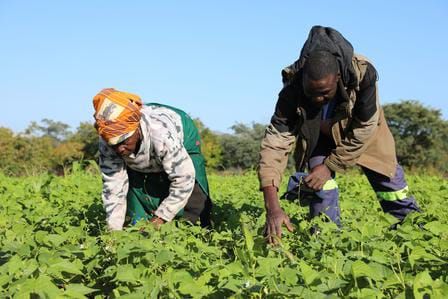
While the first harvest is pending, early indicators are positive. The maiden cropping season has 18 hectares under sugar beans, five hectares under wheat and two hectares under maize, with crop stands described as healthy.
For Saliwe Khumbula, 51, a mother of five, the developments mark the fulfilment of a long-held aspiration.
“When this irrigation scheme was established in 1995, we believed our lives were about to change. But years passed and nothing happened,” she said.
Khumbula noted that dependence on rain-fed agriculture had entrenched cycles of food insecurity in the community.
“The wait was worth it; this new development has brought back our hope for a food-secure community,” she said.
“We are no longer farming just to survive; we are farming to improve our lives,” she added, expressing optimism that increased yields would translate into income generation and improved prospects for her children.
The project is also recalibrating extension delivery through the Farmer Field School model, an approach anchored on experiential learning rather than top-down instruction.
Agricultural Extension Officer Lorraine Chimbadzwa said the methodology was building farmer confidence in the adoption of improved agronomic practices.
“Instead of simply telling them what works, they are seeing the results for themselves,” Chimbadzwa said.
Under the model, farmers utilise demonstration plots to compare variables such as fertilised and unfertilised crops, enabling evidence-based decision making.
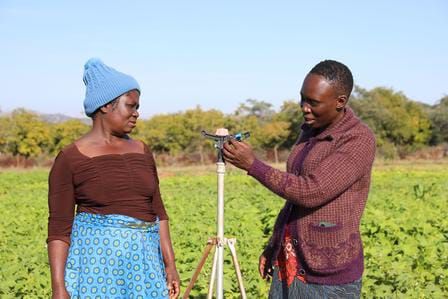
The revitalisation is also reshaping perceptions among youth. Memory Maronga, 22, said reliable irrigation had debunked the notion that agriculture is inherently high-risk.
“Now we have reliable irrigation, and we are learning modern farming techniques. It has shown me that agriculture can become a real business,” she said.
Maronga said she intends to scale up production and mobilise more young women to view farming as a viable livelihood pathway.
Women constitute more than half of the scheme’s beneficiaries and are increasingly occupying central roles in production and governance. Stakeholders say their participation is bolstering household food security and advancing economic empowerment at community level.
The rehabilitation comes against a backdrop of intensifying climate shocks that continue to undermine rural livelihoods, underscoring the importance of climate-resilient infrastructure and climate-smart agriculture.
For Farai’s farmers, the significance extends beyond hardware. The scheme, once emblematic of unfulfilled potential, has been repositioned as a catalyst for opportunity, equipping a new generation with the tools and technical know-how to treat agriculture as an enterprise.
With the first harvest on the horizon, the green fields at Farai are already signalling a broader story of resilience, food security and renewed optimism for farming households in Chipinge.
 News Sport Online