
By Tendai Chisiri
HARARE – The bulldozer arrived at dawn. Residents of Marlborough and Avondale watched in disbelief as it began clearing land inside Monavale Vlei, one of Harare’s last intact wetlands and a designated Ramsar site of international importance. The land, they soon learned, had been allocated for residential stands for Members of Parliament.
What happened next became a rare moment of pushback. Locals mobilized, environmentalists raised the alarm, and within days the government ordered a halt to construction. Permanent Secretary for Presidential Affairs and Devolution Tafadzwa Muguti arrived on site to meet stakeholders, declaring the area a “no-go zone” for developers in May 2026.
The stand-off at Monavale is more than a local dispute. It is a test of whether Zimbabwe will protect the wetlands that keep Harare’s water flowing, or continue to trade them for stands and short-term gain.
The wetland on the city’s edge
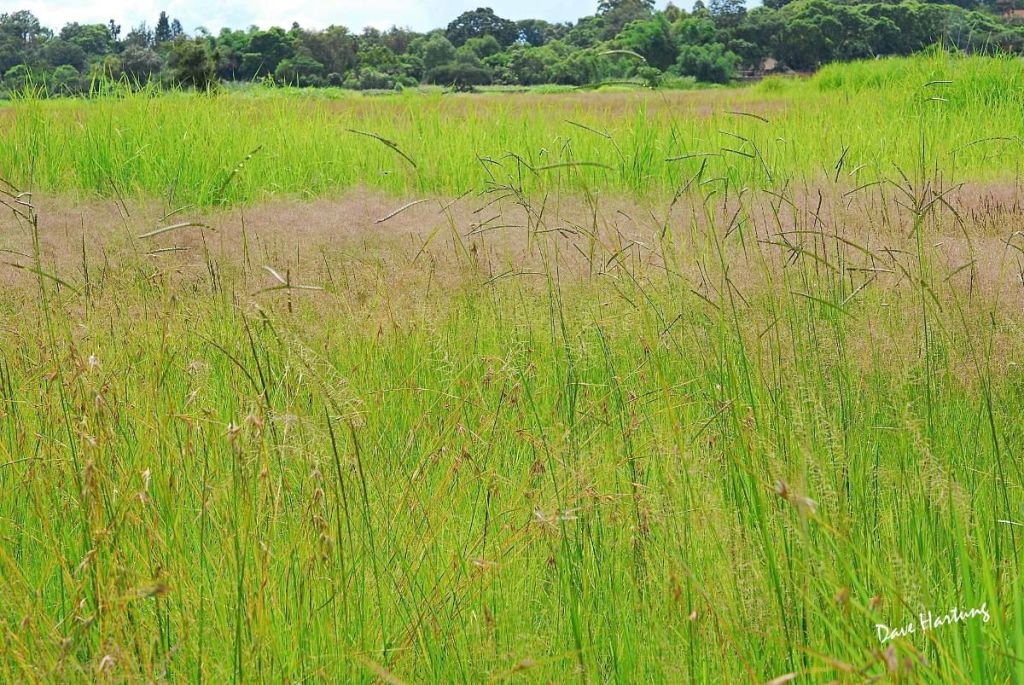
Monavale Vlei sits on Harare’s western edge, a green sponge that has buffered floods, filtered water, and sustained biodiversity for decades. It is one of only seven Ramsar sites in Zimbabwe, wetlands recognized under an international convention for their ecological importance.
“In the 26 years I have contributed to managing the protected area of Monavale Wetland alongside The Conservation Society of Monavale and residents’ committees, the wetland area has not been reduced in size,” says Dorothy Wakeling, Program Manager of the Monavale Vlei Management Trust and a leading wetlands advocate.
“The challenge is what’s happening beyond the protected area but within the overall Monavale Wetland Ramsar Site. Cultivation has increased considerably over the past decade, resulting in the reduction of the very biodiversity which manages groundwater replenishment.”
That loss has consequences. Wetlands regulate water flow into Lake Chivero, Harare’s main water source. When their vegetation and soils are disturbed, siltation and pollution increase, and the city’s water insecurity worsens.
“Should cultivation be halted throughout Harare and the wetland biodiversity restored, these healthy wetlands will contribute to water flow into Lake Chivero year-round, with all residents of the city benefiting from enhanced water availability,” Wakeling says.
Why it matters: Floods, water, and money
For Dr. Tamuka Nhiwatiwa, an aquatic ecologist and researcher at the University of Zimbabwe, the value of Monavale is measurable.
“A healthy wetland can store a surprisingly large amount of water. As a rough estimate, one hectare of intact vlei can temporarily hold between 1,000 and 3,000 cubic metres of floodwater – that’s about 1 to 3 million litres,” he explains.
During heavy rains, wetlands like Monavale slow floodwaters, reducing flash flooding in suburbs such as Avondale and easing pressure on Harare’s overstretched stormwater system.
Wetlands also recharge groundwater and purify it naturally. Vegetation and soils trap sediments and absorb nutrients like phosphorus and nitrogen before water reaches rivers and Lake Chivero.
“In economic terms, replacing these services with engineered infrastructure would cost millions of dollars annually for a city like Harare,” Nhiwatiwa says. “Wetlands provide this service continuously and at no direct financial cost.”
They also store carbon. Wetland soils, waterlogged for centuries, lock carbon away. Drain or build on them, and that carbon is released as CO₂, contributing to climate change.
The biggest misunderstanding, Nhiwatiwa says, is the idea that wetlands are “empty” or “wasted” land.
“Losing them is not a non-issue. It creates real environmental and economic costs that are often only felt later. Today most parts of Harare have no water and Lakes Chivero and Manyame are extremely polluted. Linking the high costs of water treatment and decades without running water back to the destruction of wetlands fails,” he says.
Enforcement vs allocation
The push to build on Monavale did not come from nowhere. Environmental authorities say wetland violations are widespread across Harare.
“In the last 12 months, as EMA, we have issued about 63 tickets and environmental protection orders to developers developing in wetlands in Harare Metropolitan Province, like Monavale Vlei, for violating environmental laws on wetland protection,” says Amkela Sidange, Environmental Education and Publicity Manager for the Environmental Management Agency.
She argues that protecting wetlands is central to Zimbabwe’s climate strategy.
“Wetlands are natural systems that support climate resilience, water security, and environmental sustainability. They help reduce flooding, recharge groundwater, purify water, store carbon, and protect biodiversity,” Sidange says.
“Destruction of these ecosystems would worsen flooding, increase water shortages, raise water treatment and infrastructure costs, and weaken the city’s ability to cope with climate change impacts such as droughts and extreme rainfall,” she adds.
Sidange notes that Zimbabwe, currently President of COP15 on Wetlands, is pushing to add at least five more Ramsar sites by 2028. But at home, enforcement remains inconsistent.
Government draws the line
The government responded quickly. The Ministry of Local Government and Public Works ordered a halt to all illegal construction, declaring the site a “no-go area” for developers.
At a stakeholder meeting held at the vlei, Permanent Secretary Tafadzwa Muguti delivered a blunt message.
“We need responsible local authority and responsible EMA. Anyone who goes with his plan or is asking for a house to be built or wants a stand should know, we can’t build in the wetlands,” Muguti said.
“What is the idea of us giving you a house or a stand when the water body is moving even, and tomorrow you don’t have water? This is not right to allocate Members of Parliament houses or stands in a wetland. Right now the President is the chairman of Ramsar globally. Very soon the President will be chairing the Ramsar meeting. What is the President going to say about Ramsar sites and their preservation?”
The intervention has temporarily stopped the bulldozers, but residents say the threat isn’t over. The Conservation Society of Monavale has warned that legal action will follow if engagements with the Office of the President and Cabinet fail to secure a permanent halt.
Downstream voices
Tafadzwa Gwinhi, team leader of Green the Ghetto, which works to enhance green spaces in high-density suburbs, was at the meeting.
“Whatever happens at Monavale affects the people downstream. I am in Kuwadzana, a high-density suburb. If any construction happens here, this wetland is destroyed. My people back in Kuwadzana are going to have serious droughts, and access to water and the purification of our groundwater will be affected as well,” Gwinhi says.
He and other activists envision a “Vlei Corridor” linking Monavale through Kuwadzana to Lake Chivero – a green belt that would act as the lungs of the city.
“Any form of construction will stop the Vlei Corridor,” he warns.
Gary Stafford, conservationist, falconer, and founder of Kuimba Shiri Bird Park at Lake Chivero, sees the same pattern repeating across Harare’s wetlands.
“Destruction of wetlands is affecting Lake Chivero and everybody in Harare. At Lake Chivero we have a thermal power station being built on the wetlands. There is going to be a fertilizer company, it has been approved in the wetlands. In the Ramsar site, we’ve got big factories being pushed,” Stafford says.
He points to pollution and fluctuating water levels as direct results of building on wetlands.
“We need to actually protect Monavale and other wetlands,” he says.
Laws exist, enforcement doesn’t
Experts agree the problem is not a lack of laws. Zimbabwe’s Environmental Management Act and Statutory Instrument 7 of 2007 clearly designate wetlands as protected ecosystems. The issue is enforcement.
Dr. Nhiwatiwa traces part of the problem to policy contradictions.
“Policies such as ‘urban farming’ in every open space, which were openly promoted by government in the pretext of empowerment, had a snowball effect. Many developers I have interacted with have gone on to use the fact that these wetlands are already ‘cultivated lands’ to justify that the next logical step is just to build houses,” he says.
He also recalls political interventions that have overridden environmental objections in the past.
“When the Chinese wanted to build Long Chen Mall, the Minister of Environment at that time used his powers to override all objections because ‘we cannot save a few trees and frogs’. So we have a deep-seated conflict as a country,” Nhiwatiwa says.
What happens next
Despite the political pressure, those working to save Monavale say public action matters.
Sidange urges residents to report dumping and illegal development to their ward councillor or local environmental health department.
“Make a report to the nearest council offices when there is dumping of waste, through the environmental health departments or through your ward councillor. As such, a clarion call goes to local authorities to ensure they put in place local bylaws to enforce waste management,” she says.
The fight over Monavale comes at a time when Harare is already grappling with water shortages and pollution in Lake Chivero. Wetlands offer a low-cost, natural solution that infrastructure alone cannot replace.
Sidange puts it plainly: “Protecting wetlands is not only an environmental responsibility, but also an economic and public health priority essential for the sustainable future of Harare and Zimbabwe as a whole.”
For now, the bulldozers at Monavale have stopped. But the land remains vulnerable. The outcome of ongoing negotiations between residents, government, and developers will signal whether Zimbabwe’s Ramsar commitments are more than words on paper.
“These healthy wetlands will contribute to water flow into Lake Chivero year-round, with all residents of the city benefiting from enhanced water availability,” said Wakeling.
For Harare’s hidden defenders, that is a future worth fighting for.
 News Sport Online