
By Desire Tshuma
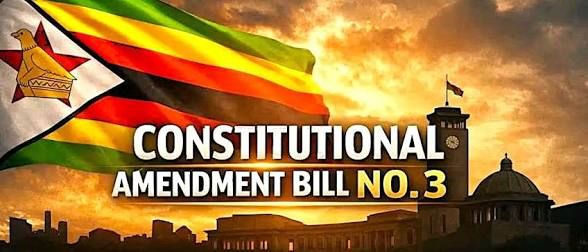
Harare — The proposed Constitution of Zimbabwe Amendment Bill No. 3 has split religious bodies and drawn fire from the Zimbabwe Economic Forum, as Parliament’s public hearings continue across the country.
The Bill, gazetted on 16 February 2026, seeks wide-ranging changes to the 2013 Constitution. Key proposals include:
- 7-year terms: Extending the terms of the President, Parliament and local authorities from five to seven years. ZANU PF Treasurer-General Patrick Chinamasa said this means “there are no elections in 2028” and incumbents “will remain in office until 2030”.
- Parliament elects President: Replacing direct popular election with a joint sitting of the National Assembly and Senate, presided over by the Chief Justice. Government says this reduces election disputes.
- 10 appointed technocrat Senators: Expanding the President’s power to appoint 10 Senators “on the basis of professional skills and expertise” to boost technical capacity in ministries driving Vision 2030.
- Electoral changes: Creates a Zimbabwe Electoral Delimitation Commission and transfers the voters’ roll to the Registrar-General. It also repeals the Zimbabwe Gender Commission and the National Peace and Reconciliation Commission.
Justice Minister Ziyambi Ziyambi called CAB 3 an “antidote to entrenched governance impediments” including disputed elections and “perpetual electioneering”. Attorney-General Virginia Mabiza said presidential term limits “remain governed by other provisions”.
The Zimbabwe Council of Churches, representing 32 denominations and about 3 million citizens, formally objected to Parliament on 13 April 2026.
ZCC said the Bill “in its current form poses potential harm to the nation” and called for it to be “withdrawn or substantially revised”.
Among its concerns: The Bill “effectively postponing elections that are scheduled for 2028” by extending terms without a fresh mandate. It warned the amendments would “concentrate executive power, weaken accountability institutions and open the door to corruption through unchecked authority”.
ZCC insisted that “direct citizen consent not parliamentary approval by those who benefit from it” is required. It recommended an independent Constitution Amendment Commission to lead consultations and said if the Bill proceeds unchanged, “a national referendum must be held”.
Former minister Prof Jonathan Moyo accused ZCC of acting “more like a manifesto of an opposition political party” and risking intrusion into Parliament’s law-making role.
The Zimbabwe Economic Forum hit back this week, saying the ZCC’s interpretation is “both misplaced and misleading in its interpretation of a lawful constitutional process”.
In a statement signed by Chairman Jay Israel Jacob Dube, ZEF said: “Zimbabwe is a sovereign constitutional democracy, and all amendments to its laws are conducted through Parliament, which carries the mandate of the people. CAB 3 is therefore a legitimate exercise of constitutional authority, not an imposition”.
ZEF said portraying the Bill as a threat to democracy is “incorrect”. “Democracy is strengthened, not weakened, when constitutional institutions function in accordance with their mandate. Any narrative that suggests otherwise risks undermining public confidence in the country’s governance systems.”
The Forum stressed: “It must be clearly stated that the Zimbabwe Council of Churches does not speak for all Zimbabweans. National direction is determined by the people through constitutional processes and elected representation, not by institutional opinions presented as the voice of the nation.”
While faith-based groups can contribute to discourse, ZEF said engagement “must be responsible, factual, and respectful of constitutional order. Elevating institutional views above Parliament creates unnecessary tension and distorts the balance of governance.”
ZEF linked CAB 3 to Vision 2030, saying reforms are “part of strengthening governance, improving efficiency, and advancing national interests. What is required at this stage is constructive engagement, not alarmism.”
Not all church bodies agree with ZCC. The Council of Churches in Africa, led by Archbishop Dr Rocky Moyo, called CAB 3 a “divine and civic necessity” to guarantee stability and Vision 2030. CCA said: “Zimbabwe has never seen such progress… We want the leader behind this shift to continue towards the realisation of Vision 2030”.
Bulawayo church leaders also endorsed the Bill, saying it will “help maintain policy consistency” and “sustain development initiatives”.
The Bill is in a 90-day public consultation period that began 17 February. Public hearings have drawn large crowds, with reports of “thousands” attending. Government says CAB 3 is “constructive reform” to “reinforce constitutional governance” and align with “contemporary African constitutional practices”.
Critics warn the changes amount to “executive consolidation by constitutional disruption” and could “roll back key features protecting Zimbabwe’s democracy”.
Parliament will deliberate after consultations close in May
 News Sport Online