
By Tendai Chisiri
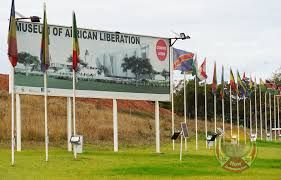
Zimbabwe Delegation in Cuba to Sign MoU on Military Equipment for Museum of African
A delegation from Zimbabwe leaves for Havana, Cuba on 6 June 2025 to sign a memorandum of understanding that will see military equipment used in the famous Battle of Cuito Cuanavale being transferred for display in the Museum of African Liberation in Harare.
The delegation is led by Ambassador Kwame Muzawazi Chief Executive Officer of the Institute of African Knowledge (INSTAK) accompanied by Brigadier-General Million Ndlovu of the Zimbabwe Defence Forces.
The Museum of African Liberation is the centrepiece of Liberation City, a 101-hecatre multipurpose development being spearheaded by INSTAK in Zimbabwe’s capital city.
Ahead of the departure for Cuba, Ambassador Muzawazi described the donation of the military equipment as an immensely generous gesture by the people of Cuba to the people of Africa, which would transform the Museum of African Liberation into a five-star museum.
“This is equipment that was used in the Battle of Cuito Cuanavale, which really was a defining moment in the history of Africa. It signified the beginning of the end of apartheid, the independence of Namibia, and the victory of the Angolan people in their struggle for self-determination, peace and development.
“So we think that the transfer of the equipment will mark a very significant milestone, which is the transformation of the Museum of African Liberation into a five-star museum. A five-star museum carries the spirit and the soul of the times gone by through tangibles. The Museum of African Liberation will not be an information centre masquerading as a museum. These are the real artefacts that carry the spirit and the soul of Africa’s glorious past,” Ambassador Muzawazi said.
INSTAK will formally sign an MoU with the Cuban Institute of Cultural Heritage for the transfer of the equipment.
“This is being transferred by the institute responsible for heritage, cultural and historical heritage, to INSTAK which is operating at a Pan African level to curate African heritage, historical heritage, history and documentation of our glorious and powerful past. We do hope that we will go and accomplish the mission.
“This will be the third visit to Cuba. The first time we went there in 2022, the Special Envoy, Ambassador Simbarashe Mumbengegwi, was sent there by His Excellency Dr Emmerson Mnangagwa to formally invite the Cuba to participate. Then we had a follow-up technical visit to discuss the finer details of the arrangement. And now we are going now to consummate the relationship,” Ambassador Muzawazi said.
Cuba is the only non-African country that deployed its own troops to confront apartheid in Africa. The highlight of Cuba’s military support for Africa’s independence was its involvement in the Battle of Cuito Cuanavale from November 1987 to March 1988. In that battle, Cuban soldiers got into the trenches with Angolan and Namibian freedom fighters to first stop the advance of apartheid forces, and then to repel them and send them retreating back to South Africa.
That colossal victory greatly weakened imperialist-backed rebels in Angola, speeded up Namibia’s quest for independence, and paved the way for majority rule in South Africa. Today, the SADC region observes 23 March, which was the last day of the Battle of Cuito Cuanavale, as Southern Africa Liberation Day.
Already, some Cuban artefacts are on display at the Museum of African Liberation. These items were formally handed over to the Museum by Mr Esteban Lazo Hernández, the President of the Cuban National Assembly on March 3, 2025, when he visited the Museum of African Liberation.
Though physically based in Zimbabwe, the Museum houses material from all African countries that waged armed struggles to liberate themselves, in addition to documenting the contributions of African and non-African countries and organisations that supported the liberation struggle politically, militarily, diplomatically and morally.
The Museum of African Liberation is conceived as a monument to the epic struggle to liberate the African people from European colonialism and apartheid.
The Institute of African Knowledge (INSTAK) is a Pan-African think tank established in 2017 and is based in Harare, Zimbabwe. Among its landmark projects to date are the Book of African Records and The Africa Factbook, the latter produced with support from the Government of Zimbabwe and the African Union. INSTAK is currently building Liberation City in Harare, whose marque project is the Museum of African Liberation
. Liberation City also encompasses Heritage Village, Liberation Mall, an Animal Park, an African-themed Amusement Park, a five-star hotel, and Presidential Villas. The Project is being undertaken with support from the Government of Zimbabwe, and in collaboration with other Governments and local and international partners.
 News Sport Online