
By Tendai Chisiri
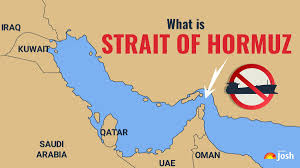
As the war enters its fourth week, the smoke over the Persian Gulf is being thickened by a diplomatic reality that is becoming impossible to ignore: neither side has built a bridge to a “middle ground.”
While President Trump points to “productive” backchannels, the chasm between Washington’s 15-point demand for Iranian capitulation and Tehran’s insistence on war reparations has turned the negotiation table into a second front.
This isn’t a traditional border dispute that can be settled with a new map; it has evolved into an existential test of wills where a ceasefire for one side looks like a total surrender for the other. With the Strait of Hormuz still a shuttered chokepoint and Israel dug into a grueling campaign for a Lebanese buffer zone, the “quick strike” envisioned in March is rapidly transforming into a long-term war of attrition that the global economy is ill-prepared to sustain.
The primary obstacle to a swift resolution is the fundamental incompatibility of each side’s core objectives. The United States has presented a 15 point peace plan requiring Iran to dismantle its nuclear sites, hand over enriched uranium, and cease support for regional groups—demands the Trump administration frames as a necessary “offramp” to prevent further global economic fallout. In response, Tehran has rejected these terms as “maximalist” and “unreasonable,” countering with five conditions of its own , including ironclad non-aggression guarantees, the payment of war reparations, and international recognition of its sovereignty over the Strait of Hormuz.
Beyond diplomacy, the military reality on the ground suggests a protracted struggle for territorial control. Israel has officially announced plans to occupy southern Lebanon up to the Litani River, intending to seize nearly a tenth of Lebanon’s territory to create a permanent “security zone”. This ambition has been met with vows of “existential resistance” from Hezbollah, ensuring that even if a ceasefire were signed in Tehran, the ground war in Lebanon would likely continue as a grinding insurgency.
Meanwhile, the economic dimension of the war has created a “deadlock of attrition.” The effective closure of the Strait of Hormuz on March 4 has triggered the largest oil supply shock in history, with Brent Crude peaking at $126 per barrel. While this puts immense pressure on the U.S. to de-escalate, Iran views the blockade as its ultimate leverage, unlikely to be surrendered without the total lifting of international sanctions.
Ultimately, this conflict has moved beyond a series of tactical strikes into a systemic reordering of the Middle East. With both leaderships entrenched—the U.S. and Israel seeking a definitive end to Iran’s regional influence and Tehran fighting for its survival—there is no clear “middle ground” for a conventional peace treaty. The war is now a race against time: can the Iranian regime survive the systemic economic collapse and internal transition following the reported death of its Supreme Leader, or will the global energy crisis force the West to blink first? Until one side faces total exhaustion or the other achieves its maximalist goals, the cycle of retaliatory salvos and stalemated diplomacy is poised to endure.
 News Sport Online