
By Tendai Chisiri
Local and international experts met to discuss how human-wildlife conflict can be turned into peaceful coexistence in Zimbabwe and to launch a new WhatsApp tool which makes vital information accessible to communities in the capital on Wednesday.
With significant wildlife populations, the second-largest population of elephants in the world, and recent history of drought creating pressure on water sources, Zimbabwe was chosen to trial this new tool. While human-wildlife conflict occurs globally, with large and potentially dangerous animals adjacent to small-scale agriculture, Zimbabwe has one of the highest incidence rates in the world. Zimbabwe Parks and Wildlife Management Authority work tirelessly with communities and stakeholders to address this issue and have partnered with Wild Africa to launch the new WhatsApp chatbot.
‘Wildlife Info’, the WhatsApp chatbot designed by Wild Africa together with South African WhatsApp technology company RatherChat, brings together conflict mitigation techniques and tools from Save the Elephants and Wildlife Conservation Action, together with the power of AI, and has been supported by the Elephant Crisis Fund. Launched in partnership with ZimParks, it provides information on where to report wildlife crime or an injured wild animal, guidance on wild animal behaviour and methods of reducing conflict, crop damage and livestock predation from across the continent.
With ‘Wildlife Info’, information that could protect lives is just a WhatsApp message away. Simply follow this link to get chatting, or save +263 78 727 6366 as a contact and start the conversation by texting ‘hi’.
Users answer questions about their particular challenge and they receive tips, illustrated guides and images about how to deal with elephants, crocodiles, lions, hippos and other wild animals. They can also ask a specific question about elephants and receive an answer directly. Finally, there is the option to test their knowledge of elephants and stand a chance of winning data and other prizes.
Peter Knights, Wild Africa CEO, stated “Conflict with agricultural interests is one of the chief threats to wildlife that climate change will only intensify. Wildlife drives the tourism industry, creating jobs and boosting the economy, while protecting the natural foundation for human life, but it can create serious issues for local communities and everything possible should be done to address these issues. We believe Zimbabwe can be at the cutting edge of how people and wildlife can coexist, mutually benefitting all.”
Dr. Lucy King, Save the Elephants’ Coexistence Director emphasised, “We developed a toolbox for understanding and learning how to live with elephants, but Wildlife Info will make this information freely available to anyone with a mobile phone and WhatsApp. We hope the information will help communities coexist more easily with elephants.”
Wildlife Info has been designed for multiple use cases, and a wide age spectrum. Whether it’s a teacher looking for content to teach their class about elephants, a school child accessing information about walking safely to school, a farmer looking to protect their crops and livestock from wildlife, an individual looking to report a poaching incident, or community leaders looking to empower those in their care with new income ideas while living close to wild animals, Wildlife Info puts vital information in their hands.
A launch campaign is being rolled out for Wildlife Info that specifically targets communities experiencing human-wildlife conflict and will include billboards, social media, radio ads, TV spots and more. Alongside informative and educational content, the campaign also features public service announcements from sports, media, music and comedy ambassadors.
Following the launch of Wildlife Info, attendees discussed a broad range of methods of mitigating human-wildlife conflict from around the world. Amongst experts from across the continent, an international delegation from Valiance Solutions in India was in attendance, presenting their AI-powered human-wildlife conflict mitigation work.
While there were around 50 deaths in Zimbabwe related to wildlife last year, mainly from crocodiles, attendees were briefed on the new Parks and Wildlife Management Amendment Bill, which seeks to establish a Human-Wildlife Conflict Relief Fund, by Ambassador T. Chifamba, Permanent Secretary in the Ministry of Environment, Climate and Wildlife. These steps by the government are intended to provide monetary support to victims killed or injured by wildlife and will empower local communities near wildlife areas to be more involved in conservation.
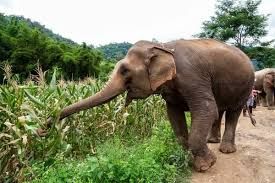
In addition to personal injury, wild animals sometimes cause crop damage. Elephants and other herbivores may raid farms, especially when these are adjacent to national parks. Attendees discussed methods to reduce this kind of damage, from electric fencing to the use of beehives, chilli deterrents, trenches and other methods.
Livestock predation can also be reduced through use of predator-proof bomas, flashing lights and even vuvuzelas. The latest methods were unpacked in various sessions.
“There is no one-size-fits-all solution, but understanding wildlife behaviour and proven methods that have already worked in Zimbabwe, is a critical first step. Learning about crop and livestock insurance, community benefit schemes and specific farming techniques, like chilli fences and predator-proof bomas, can help,” said Dr Moreangels Mbizah of Wildlife Conservation Action.
Farai Chapoterera, Zimbabwean Representative for Wild Africa added, “We hope to make this information readily available to anyone with a mobile phone and WhatsApp, while also giving them an easy way to report problems to ZimParks as the relevant authority, from problems with wildlife to attempted poaching and injured animals. Zimbabwe is the first in the world to try this approach and if helpful, it could be adopted in other countries. There is no easy solution but this could be a useful tool in helping reduce the negative impacts.”
Zimbabwe Parks and Wildlife Management Authority (ZimParks) general-director, Dr Fulton Mangwanya applauded the dialogue on Himan Wildlife Conflict.
” It is with great pleasure and a profound sense of responsibility that I welcome you to this important day were we want to have a dialogue on this topical subject matter of Human Wildlife Conflict. Today adds another dimension to an essential dialogue that bridges diverse disciplines, integrates varied perspectives, and ultimately strives to harmonize our interactions with the natural world to promote co-existence amongst our communities that live with wildlife . Indeed, this milestone event could not have come at any other opportune time than now, as we foster the attainment of Zimbabwe’s Vision of an Empowered and Prosperous Upper Middle-Income Society by 2030”, he said.
”Human wildlife conflict is a complex and multifaceted issue, affecting ecosystems, communities, and species across the globe. From the destruction of crops by elephants to the depredation of livestock by predators, these conflicts are not merely environmental problems but deeply intertwined with social, economic, and cultural dimensions. For instance, a total of 50 people were killed by wild animals in 2023 compared to 67 people who were killed by wild animals in 2022. Human, crop and livestock destruction not only reduces incomes but also affects livelihoods and our people’s abilities to feed their families. Hence, impacting the nutrition, health and education capacities of households”, he added.
”The growth and stability of wildlife populations in the major wildlife areas affects ecosystems, habitats, and communities adjacent to the protected areas. If the wildlife population growth among animal species such as elephants, is left unchecked, it would lead to overgrazing, habitat degradation, soil erosion and more conflict with adjacent communities. Therefore, a holistic and collaborative approach to address the challenge of our wildlife animal population is important considering the impacts of climate change, especially that of elephants”, he expressed.
“As we gather here, let us acknowledge the urgent need for innovative solutions and collaborative efforts. Our shared goal is to find pathways that mitigate conflicts while promoting the conservation of wildlife and the well-being of human communities. This dialogue is an opportunity to share knowledge, exchange ideas, and build partnerships that can drive effective, sustainable strategies through sharing of ideas and learning from other countries in the region”, he implored.
” Let our discussions cover a wide array of topics, from cutting-edge research and technological advances to community-based solutions and policy frameworks. We are privileged to have a diverse group of experts, practitioners, and stakeholders with us, each bringing valuable insights and experiences to the table”, he urged.
 News Sport Online