
By Tendai Chisiri
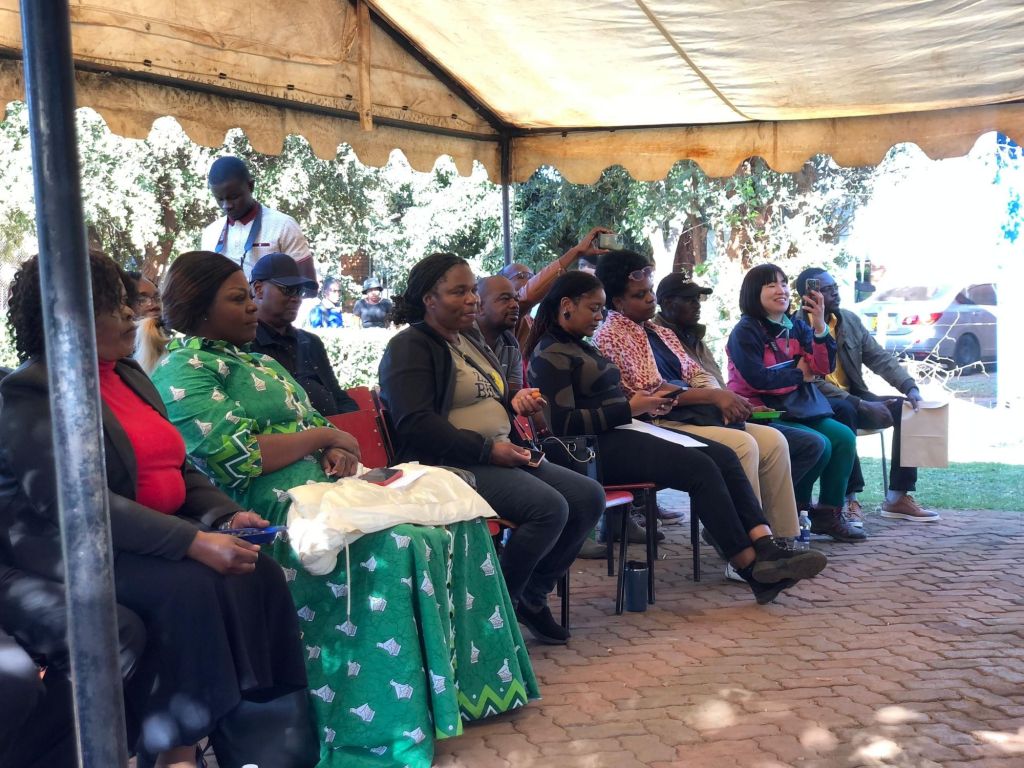
Townships have rich history, beauty and warmth that individual visitors may miss, thus a group of innovative youths in partnership with Kukura Business Accelaratoer (KBA) launched Kwedu Township Tourism in Dzivarasekwa last Friday.
The group led by Rumbidzo Mawoyo and Hillary Malaba, in partnership with KBA’s exciting initiative aims to promote tourism in Zimbabwe and empower local communities
”Tourism is a vital and growth sector in Zimbabwe, contributing significantly to the country’s economy and job creation” said Mawoyo the initiative Head in a press release. ” Kwedu Township as it achieves these objectives is committed to showcase the rich cultural heritage and natural beauty of Dzivarasekwa Township providing a unique and immersive experience”,.
Kwedu Township Tourism is in partnership with the Zimbabwe Tourism Authority (ZTA), the Government of Zimbabwe, Dzikwa Trust, Heritage Expeditions Africa, KBA, DZ community who are the backbone of the initiative and some journalists who are covered the tours.
” We are thrilled to launch Kwedu Township Tourism and share the history, beauty and warmth of Dzivarasekwa with the wirld” reiterated Mawoyo. ” We believe in the power of tourism to transform lives and communities, and we are committed to making a positive”.
The program in Dzivarasekwa offered a wide range of activities including, guided township tours, traditional cuisine, local crafts and arts workshops, community engagement and cultural exchange and experiencing the greening and income generating initiatives by being undertaken in Dzivarasekwa.
The tour busees manouvred in the busy roads of Harare from the city centre to Dzikwa Trust Centre in Dzivarasekwa, a western high-density suburb of Harare.
Dzikwa Trust was founded by Seppo Ainamo , a Finnish nationality. His wife Oili Woulle, a former reserve bank governor of Finland is the secretary general. Ainamo started a feeding centre at Dzivarasekwa 4 Primary School and later built Dzikwa Trust Center in 2002. The name is derived from Dzivarasekwa using Dzi and kwa to make Dzikwa.
The place at first was a dumpsite reserved by the local authority for an orphanage. When Ainamo visited Zimbabwe some time ago , he was touched by the state of the less privileged children in the com munity. He noticed how children were sleeping during the school lessons due to empty stomachs. When he came back to Zimbabwe, he then started a feeding centre.
The Dzikwa Trust Centre which is not an orphanage caters for less privileged orphans who have lost one or both parents by paying for their fees and giving them lunch from Monday to Saturday. They also offer remedial lessons and free computer lessons at their ICT lab where the children are taught ICDL and other ICT lessons. They pay fees for about 300 less privileged students in the community and feed more than 400 children per day. There is also arts and performing groups. Some projects run by the centre are tree planting and a programme for environment biodiversity and food security.
The tour bus first stopped at Dzikwa Trust before visiting two homes of the beneficiaries. The second stop was at a cobbler’s stall. Nyasha Ndlovu, the disabled man aged 60 was trained as a cobbler Jairos Jiri in Bulawayo. Because there are no private employers in Dzivarasekwa, the people therefore have to be self-employed to make a living. Ndlovu says he was bewitched by a neighbour at a young age after he had uprooted vegetable plants in her garden. He was born able-bodied.
The tour buses passed through the communities with the stakeholders viewing the activities in the community. The next stop was at Batsiranai Centre for women with disabled children founded by a American lady. The ladies have been abandoned bybtheir families due to the children with disability. Some of the ladies live at the centre. The creative ladies have a lot of products like hand bags, pillows, dolls, and wire postcards
The fourth stop was at Dzivarasekwa Environmental Conversation Trust (DZECT). Dzikwa has just completed a biodiversity and food project funded by UNDP together with DZECT. The project produces fish, tomatoes, road runner chickens, herbs, vegetables and goats. Dzikwa Trust has provided solar panels to pump ester for irrigation and for the fish ponds.
The last stop was at 60 hectares of area used for tree planting and other activities. Dzikwa Trust is leasing from City of Harare the land for 25 years. It emerged that the lease has been extended to 40 years.
At the area, there is aquaculture, tree planting, orchards, organic gaderning with drip irrigation, bee keeping, catchment protection, educational nature trail and capacity building workshops. The area is between Dzivarasekwa 3 and 4. The neighbouring Marimba river was protected by planting vetiver grass and banana seedlings. About 120 community members were trained in vegetable and herbs gardening as well as bee-farming.
The tour ended with scintillating entertainment at Dzikwa Trust Activity Centre. The tourism stakeholders were entertained to poem, traditional dance from Dzikwa Trust Centre senior dancers, Dzikwa marimba band, Dzivarasekwa 2 Secondary School and marimba band mentors.
”We are going to have another tour as early as July in Chiweshe rural area”, revealed KBA chief executive officer Edward Meda. KBA’s main goal is to identify business ideas that can be incubated into successful companies.
74- year-old elderly woman Sarah Wakoya revealed that the name Dzivarasekwa came from the fact that there was a sacred pool in the river called Sekwa.
” The name Dzivarasekwa came from a pool in the river Sekwa. A mountain nearby was a sacred place together with the pool. It was joined to Dzivarasekwa meaning the pool of Sekwa. Literally it should be pronounced Dzivaresekwa to mean the pool of Sekwa not Dzivarasekwa which translate to Sekwa’s pool which sounds as Sekwa is a human”.
” Before independence, the Dzivarasekwa was known as Gillingham but after indepence it was named Dzivarasekwa from a small area called Sekwa. The late Mbuya Mbare has to brew traditional beer for the houses to be built as the area is scared”, Wakiya said.
The area has its own myths like any other scared places. It is alleged that the city council built a water tank to service Dzivarasekwa extension on the scared mountain but they failed to deliver the water to Dzivarasekwa extension and people believe there was need for some traditional rituals to be done.
 News Sport Online