
By Tendai Chisiri
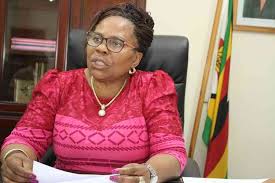
Women Affairs, Community, Small and Medium Enterprises Development minister Monica Mutsvangwa
Women Affairs, Community, Small and Medium Enterprises Development minister Monica Mutsvangwa said climate change’s dire effects are much experienced by women with violence against women and girls also a factor during and post-disaster.
Speaking at the Gender and Disater Risk Management Stock Taking Workshop held in the capital, the minister gender and disaster risk management is an uttermost issue and it is now an open book for everyone that read about how the climate is changing and affecting all of us everywhere.
The event was held by CARE International in Zimbabwe, UNDP, and their partners in collaboration. Senior government ofiicials, United Nations agencies, sevelopment agencies, private sector and civil society organisations among others attended the event.
“About 40% global population is now living with the harsh realities of climate change, high temperatures, drought, flooding, and many other extreme weather events and Zimbabwe has not been spared. Decreased agricultural production, food insecurity, poor health, scarcity of water and energy resources, climate-induced migration and conflict, and climate-related natural disasters are some of the challenges that are being aggravated by climate change”, she said.
She bemoaned the lose of lives of women who die more than men during the disasters for instance Cyclone Idai disaster. “Disasters, whether natural or man-made, have the potential to disrupt lives, destroy infrastructure, and cause immense suffering. They often exacerbate existing inequalities and disproportionately affect women, girls, men, and boys in different ways. However, it’s sad to state that the worsening impacts of such disasters lead to highly gendered impacts which largely affect women and girls. Violence against women and girls is also a factor during and post-disaster. Evidence shows that during the Cyclone Idai disaster here in Zimbabwe, more women than men reported losing their livelihoods and lives. During COVID-19, many women and girls faced GBV and teenage pregnancies”, Mutsvangwa revealed.
Climate-induced disasters are now a reality and women and children carry the brunt of the impacts. Gender also intersects with other factors like disability, culture, religion, or socio-economic disadvantages, creating additional vulnerabilities and barriers to adaptation. These are likely to limit women in adopting effective strategies for preparing, adapting, and responding to disasters. It takes collaborative efforts such as this one to bring lasting change. Because of that, the Sendai Framework on Disaster Risk Reduction (2015-2030) states that gender should be integrated in all policies and actions. The Beijing Agenda for Global Action on Gender-Sensitive Disaster Risk Reduction (2009) calls for gender-sensitive approaches to disaster prevention, mitigation and recovery strategies, and natural disaster assistance.
“For Zimbabwe, we acknowledge that there is an urgent need for us to review and put in place the DRM Act, the Civil Protection Act, and a National DRR Plan which can be replicated at the local level. As a Ministry, we are committed to ensuring that our disaster risk management efforts are inclusive, equitable, and responsive to the needs of all people; integrating gender perspectives into our policies, plans, and practices, to address the specific vulnerabilities and capacities of women, girls, men, and boys”, she added.
“Benjamin Franklin says, “When the well is dry, is when we know the worth of water”. We must not wait for us to see the well drying up. I am happy that organizations like CARE International and UNDP are creating such platforms for joint efforts as we scale up, support, and create spaces for women’s voices to be heard and ensure their active participation in decision-making processes during disaster planning, prevention, response, and mitigation”, Mutsvangwa stated.
“As a Ministry, we are committed to ensuring available resources build the capacity of government actors at different levels and other key stakeholders to integrate gender perspectives into policies, plans, and practices that address the vulnerabilities of women and girls. By doing so, we ensure that our disaster management efforts are inclusive, equitable, and effective. An empowered woman is a key agent of change and can participate meaningfully in building a more resilient community. We need to support them by providing an enabling environment; changing harmful and unequal power relations and transforming harmful structures and social norms for them to exercise their capabilities”, she added.
“I will reiterate, that collaboration and partnerships are key to promoting gender equality and enhancing disaster resilience. Civil society organizations, the private sector, women’s groups, international agencies, and the government share knowledge, resources, and best practices that can bring about inclusive gender transformative disaster risk mitigation strategies. We need collective efforts to build knowledge, skills, and capabilities to create opportunities for people of all genders, to achieve greater impact and build a safer, and more inclusive world. This is a tangible realization of one of the priorities under the National Development Strategy 1”, she said.
She concluded by commending CARE International in Zimbabwe, UNDP, and their partners for collaborating to hold such an important event. “We stand in solidarity indeed declaring that ACTION is needed now to put women and girls at the center of Disaster Risk Mitigation to build women’s resilience to Climate Change. If gender inequality in climate change and disaster risk mitigation is not addressed, sustainable outcomes may not be secured. As the Ministry of Women’s Affairs, we are committed to ensuring that gender considerations are at the forefront of our disaster risk management to create a more resilient society that protects and empowers all members of society”, she elaborated.
Permanent secretary in the ministry, Moses Mhike said they have convened the meeting a few months after successfully launching the Climate Change Gender Action Plan and subsequently conducting a stakeholder mapping exercise for the implementation of the Climate Change Gender Action Plan (CCGAP).
He said the objectives of the meeting is to take stock of Gender and DRM activities in Zimbabwe including sharing updates on various policies and practical actions from key stakeholder, to give a platform for the MWACSMED and partner organizations to share updates and progress on gender-responsive preparedness, to share lessons learnt and best practices on gender-transformative (CARE’s Women Lead in Emergency (WLiE) approach) humanitarian response and Women Deliver Conference by partners and to plan for Zimbabwe’s participation at COP 28 and hosting of a side event on Enhancing Women’s Leadership in DRM
“This workshop provides us with a unique opportunity to reflect on the progress we’ve made as a nation, the challenges we’ve encountered and how to solve them as we move forward. Gender equality and disaster risk reduction are intrinsically linked, and we must continue to advance our understanding of this connection to build a more resilient and equitable world”, Mhike said.
 News Sport Online