
By Tendai Chisiri
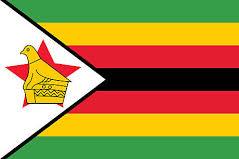
Zimbabweans will vote on Wednesday to elect their second president of the Second Republic with total of 11 candidates are officially running in the presidential election of the harmonized elections but only two of them are considered to be in contention. The two are incumbent Emmerson Dambudzo Mnangagwa of the ruling Zimbabwe African National Union-Patriotic Front (ZANU-PF) and Nelson Chamisa of Citizens Coalition for Change (CCC) the main opposition party.
There is a cliché that elections are won and lost during campaigns. This has given rise to many myths about Zimbabwean politics. The voter has been portrayed as fickle, someone who can be swayed in a matter of weeks through a high-blitz campaign. The vote of a person who has not decided which way to vote in an election, or one who does not consistently vote for the same political party is called floating vote. Hence the saying, “the last-ditch campaigns focus on winning the increasing floating votes”
While the role of campaigns in shaping the outcome may be true in American politics, as the campaign to elect the president runs for more than a year-and-a-half, in Zimbabwe, where a large number of voters depend on the State for their well-being, campaigns alone do not make or break elections. Campaigns can shift the momentum in favour of a party, but it is difficult for even well run campaigns to overturn historical factors operating in the electoral arena. No matter how well coordinated a ZANU-PF campaign is in the urban areas it cannot suddenly become a major party there. The same is true for the CCC in rural areas.
The harmonized elections mean Zimbabweans will vote for the presidential, parliamentary and local council the same day. For a presidential candidate to be declared winner, he or she must receive more than 50 percentof the vote. If no candidate receives more than 50 percent of the vote, a runoff election is held between the two candidates with the highest number of votes. 2 October is the date for this year’s elections runoff.In the last general elections Emmerson Mnangagwa had 2,456, 010 votes while Chamisa garnered 2,151,927 votes with them having 51,44% and 45,07% respectively.
Elections are won over accumulated factors — the sentiment in favour (or against) the incumbent, credibility of leadership, the political narrative, organisational resources of parties, and social coalition on the ground, among others. It is thus important to understand when campaigns can alter the nature of structural constraints and create opportunities for political parties to effectively stack these factors in their favour.
In this year’s election both teams have changed the way they have been campaigning. ZANU PF campaigning much in the rural areas where it has a stronghold instead of trying to lure votes from the urban areas. This has also seen Chamisa campaigning in rural areas to adds votes as he got a stronghold in the urban areas. Chamisa lost the 2018 elections on a narrow margin because the rural areas have a large population of voters and he was thinking it was going to be a landslide victory has a chance to increase votes by campaigning vigorously in rural areas.
However Mnangagwa is campaigning for those who votes for him to keep on voting as he has seen that it is not lucarative to chase urban votes that are elusive. Both parties resemble two different entities that even with a day to go for election day, someone can think of going to vote and then choose the party he/she needs after having understood what they are offering. The campaign environment has been tense with all parties coming to sense that it is only them and not anyone who can make people vote for them.
Despite assurances from Mnangagwa that the vote will be free and fair, a number of government actions have once again tilted the balance heavily in favour of the ruling party, the Zimbabwe African National Union-Patriotic Front (ZANU-PF). These include crackdowns on the opposition and arrests of its supporters; the delimitation of constituencies by the electoral commission in a manner that favours the ruling party; and measures limiting the opposition’s visibility in state media. With such steps, critics argue, ZANU-PF aims to guarantee itself electoral victory while avoiding overt intervention during the actual balloting, when scrutiny of various kinds will be greater.
Meanwhile, the large Zimbabwean diaspora, among whom opposition support runs high, is not allowed to vote from abroad despite longstanding demands from civil society and the opposition for this group to be enfranchised. Media coverage of the election is also slanted in favour of the ruling party, since radio and television – the main sources of information for rural dwellers who represent ZANU-PF’s traditional base – are dominated by state-owned outlets.
Against this backdrop, authorities exude confidence that voters will back ZANU-PF at the polls. The Mnangagwa administration goes a long way to showcase its achievements, notably emphasising new infrastructure projects like roads, and maintains it is in the best position to take the country out of its economic and diplomatic isolation. But the country’s economy is in disarray, with Zimbabwe facing hyperinflation and a punishing cost-of-living crisis. ZANU-PF largely blames the state of the economy on Western sanctions placed upon it.
The CCC says Chamisa is in a strong position to win the presidency. The party maintains that the results of parliamentary by-elections in March 2022, in which it won eighteen of the 29 seats up for grabs, were a foretaste of what is to come in the forthcoming polls. Also, the 2018 election was tighter than expected, with Mnangagwa only narrowly avoiding a runoff with 51.44 per cent of the vote to Chamisa’s 45.07per cent. More fundamentally, the CCC has been seeking to capitalise on the widespread discontent with ZANU-PF’s failure to deliver on its 2018 campaign promises.
But despite these hopes, the opposition appears weakened. The various measures taken by state institutions against its members have undermined the CCC’s capacity to mount a credible challenge. Moreover, the CCC leadership cannot escape all blame for the party’s declining stock. The party has led a disorganised campaign – intentionally, its members argue, as part of the “strategic ambiguity” it maintains to avoid infiltration and harassment by ZANU-PF. The process for selecting CCC candidates for parliamentary and council elections was far from transparent, for example, with the nominees’ names kept secret up to the last moment. The CCC said the secrecy was necessary to prevent ZANU-PF from persecuting the chosen candidates.
Resources are also a factor. The opposition is not as well-heeled as ZANU-PF, which has been accused by observers of using state funds for its campaigns. There are also doubts as to whether the opposition has the funds to deploy competent observers in all the country’s polling stations. It may have particular difficulty deploying observers in rural areas, which traditionally are ZANU-PF strongholds, and where they are more likely to face attempts at intimidation than in cities, from which the opposition draws most of its support.
Whilst Mnanagawa is using the developments he has done in the Second Republic to woo votes as a manifesto although they are said not to have a manifesto. Chamisa is using a manifesto whereby he focuses on the problems that are bedvelling the masses. This portrays that the parties are favouring to win not only that they are participating for an election. All are interested to win with Chamisa in a precarious position unlike the previous elections between ruling party’s Robert Mugabe and opposition party’s Morgan Tsvangirai whereby the ruling party had a manifesto different from their works.
In the latest Afrobarometer polling, 35 per cent of respondents said they will vote for Mnangagwa and 27 per cent for Chamisa, with 27 per cent refusing to disclose their preferred candidate.
 News Sport Online