
By Tendai Chisiri
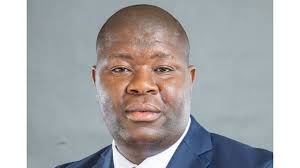
Permanent secretary John Basera
Ministry of Lands, Agriculture, Fisheries, Water and Rural Development recenlty held a Crop and Livestock Assessment (CLAFA) planning meeting at a capital hotel attended by various stakeholders from the public and private sectors, civil society organizations, development partners, and academia.
CLAFA is a vital exercise that provides us with reliable and timely information on the performance of the agricultural sector in Zimbabwe said the permanent secretary in the ministry John Bhasera.
Speaking at the stakeholder planning workshop, John Bhasera said the need of new policies in the agriculture sector results in the assessments of programmes being done.
“The specific objectives of CLAFA in Zimbabwe are to estimate the production and yield of major crops, livestock, and fisheries, to assess the food security situation and identify vulnerable areas and groups, to evaluate the impact of weather, pests, diseases, and other factors on crop, livestock, and fisheries performance and toprovide recommendations for policy and planning purposes,” he said.
The CLAFA data is used for various purposes, such as food security analysis, policy formulation, planning and budgeting, monitoring and evaluation, and evidence-based decision-making.
The CLAFA exercise is conducted thrice times a year: the first round in late January to early February, the second round end of March to the beginning of April, the wheat assessment which is conducted from the end of June to July, and the post-harvest assessment in August.
The first round assesses the area planted, input availability and distribution, crop condition and prospects, livestock situation, and water availability.The second round assesses crop production, post-harvest losses, livestock condition and mortality, fisheries production, and food security situation.
Post-harvest is aimed at assessing what the farmers really harvested so as to improve the agriculture sector’s second-round estimations. The post-harvest is now called Bulk Vision 2030.
“The post-harvest assessment is the one scrapped for Bulk Vision 2030. This is inline with the National Development Strategy 1(NDS1),” elaborated permanent secretary.
The CLAFA exercise is a collaborative effort involving various stakeholders from the public and private sectors, civil society organizations, development partners, and academia.
The Ministry of Lands, Agriculture, Water, Fisheries, and Rural Development is the lead agency responsible for coordinating and overseeing the CLAFA exercise.
However, the CLAFA exercise faces some challenges that affect its quality and timeliness.
Some of the challenges are, inadequate funding for logistics, training, supervision and data processing, lmited capacity of enumerators and supervisors in terms of skills and equipment, poor network connectivity and electricity supply in some arareas, lack of standardization and harmonization of data collection tools and methods among different stakeholders and low participation and cooperation of some farmers and communities.
To address these challenges, permanent secretary said there is need to moblixe adequate resources and adopt innovative approaches to improve CLAFA exercise.
Some of the possible solutions noted are seeking financial and technical support from development partners and private sector players, using digital platforms such as tablets and smartphones for data collection and transmission, enhancing the capacity of enumerators and supervisors through training and provision of equipment, srengthening the coordination and collaboration among different stakeholders through regular meetings and consultations and sensitizing and incentivizing farmers and communities to participate and cooperate in the CLAFA exercise.
He added that there is need to ensure that the CLAFA data is accurate and authentic by applying rigorus quality control measures at every stage of the exercise.
Some of the measures are conducting random spot checks and verification visits to validate the data collected by enumerators, cross-checking and triangulating the CLAFA data with other sources of information such as satellite imagery, meteorological data, market prices and household surveys, applying statistical methods such as sampling design, weighting factors and error margins to analyze and interpret the CLAFA data and disseminating and sharing the CLAFA data with all stakeholders in a timely manner through various channels such as reports, bulletins, websites and social media.
In response to the permanent secretary’s call, various stakeholders commended the ministry for reaching its targets.
Agriculture 2025 target is now 25% less.
Food and Agriculture (FAO) country assistant programme officer , Consistance Pepukai welcomed the stakeholder planning workshop as a good initiative. “Food security is our primary concern in many countries Zimbabwe included,” she said.
Zimbabwe National Geospatial and Space Agency (ZINCSA) represantaive Pepukai Chifamba on the response to the permanent secretary’s call said they are creating an app so that all the information can be found on one click.
Seedco agronomist, Wendy Madzura also hailed the workshop. “If we are going to be data driven, it becomes easier for us in the private sector to make decisions,” she said.
She applauded the ministry for covering all the sector’s in the agricultural space. ” You are leaving no one and no place behind as both communal and commercial farmers are being included”, she added.
CLAFA helps the agriculture sector in data collection, data analysis and data dissemination.
 News Sport Online