
By Tendai Chisiri
Pastures| Easiseeds
Europe Africa Seed Initiative(EASI)in conjunction with Zimbabwe Association of Diary Farmers(ZADF) are reaching out to diary farmers for cost effective and nutritious feed through pastures.
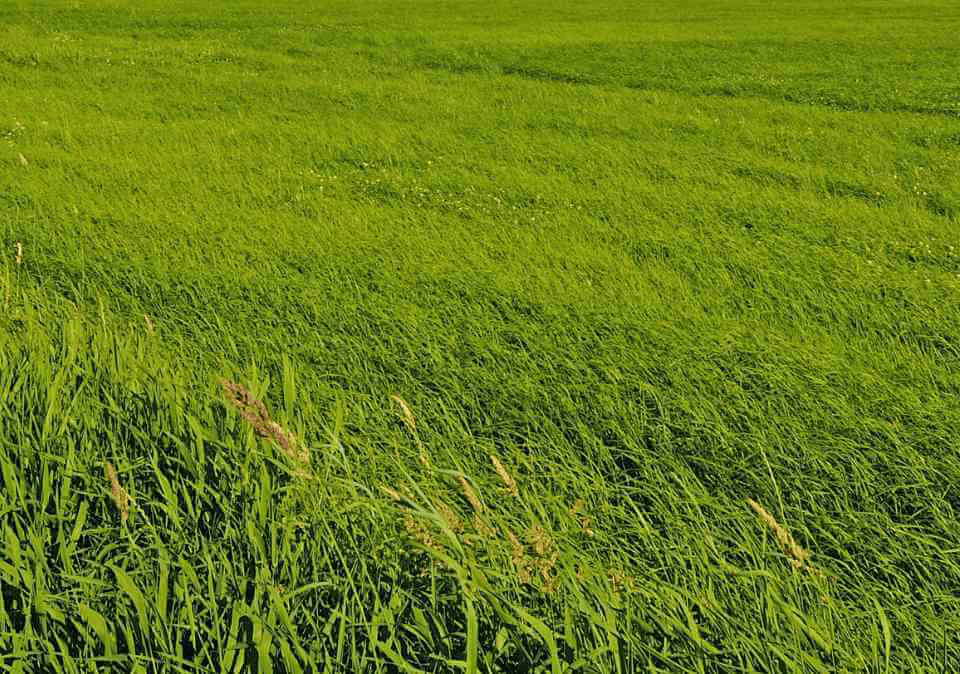
A field day and technical discussion event , EASI/ZADF Pastures Field Tour and Technical Discussion was held at EASI Seeds Hatcliffe Estate in the capital city to educate farmers on how to produce forage and there was a showcase of pasture seeds and pasture demonstration fields.
Guest of honour at the event, permanent secretary in the ministry of Agriculture John Basera in an interview with journalists on the sidelines of the event praised the dairy industry which he said is going for growth in line with the motto of the award winning ministry “Going for growth”.
” The dairy industry is going for growth in terms of the milk production and output. So far there is a 6% surge this year compared to the same period last year that is from January to May”.
“Same period last year, milk produced was about 35 to 36 million litres but so far this year from January to up to the end of May, the milk produced is about 39 million litres which is about 6% increase ,” said permanent secretary.
“The diary sector is really on a good rebound and is actually responding to the critical touch points as contained in the livestock recovery growth plan where the ministry is supporting all the sub sectors in the very sub space that is the small holders dairy farmers, the medium scale farmers, as well as the large scale farmers in the dairy sub space”.
” The diary subspace is responding quite positively to the critical ingredients and touch points contained in the livestock recovery growth plan. One of the key movers of that trajectory is obviously the support to small holder farmers”, added Basera.
“We took a deliberate intervention and a deliberate move to support the small holder farmers who contribute quite significantly to the milk production in the country. We supported them with what we call a start up and life like stock support comprising basal fertiliser, top dressing fertiliser, chemicals as well as the seed and to do silage,” he explained.
“Obviously we are promoting on farm feed formulations so that we close what we call the vialibilty gap. We have realised that there is viability gap the feed of the shelf was actually going up thus the price whilst of course the milk producer that is the per litre producer price was remaining stagnant”.
So we needed or had to intervene then as government, we supported the small holder farmers with standard input package to do silage. One hectare of silage can produce up to 35 or even 60 tonnes under good management of silage”, elaborated permanent secretary.
The other move was to support the medium scale farmers and large scale farmers as diary commercial farmers. It was under the commercial contract farming programmes which were administered by Commercial Bank of Zimbabwe (CBZ) and AFC.
” This paid dividends especially in the form of increasing lived scaled productions level that is milk produced per cow per day. It went up from an average of 8 lives per cow per day now to 12 litres per cow per day which is quite incredible ” he revealed.
Also there has been a surge in terms of the dairy herd in Zimbabwe by 11,3% from 48 000 now to 53 000 and of course the ministry’s target by close of 2023 is 55 000.
In his remarks, ZADF national chairman Ernest Muzorewa commended all the delegates, dairy farmers and all value chain players for participating at the pasture field day and technical discussion.
“The diary industry continues to significantly contribute to agricultural transformation which is a top priority for the Government of Zimbabwe”, he said.
He went on to say that the livestock sub-sector contributes to household and national nutrition security, foreign currency earnings and is a source of livelihood for about 67% of country’s household.
” This is why in June 2017, the Zimbabwe Government represented by the minister of Agriculture signed “Dairy Declaration of Rotterdam”, at the World Dairy Summit of 2016 committing Zimbabwe to the sustainable development of dairy sector and recognising the UN 2030 Agenda for Sustainable Development.
He also applauded the EASI/ZADF pastures field tour and technical discussion as an effort to make diary farming viable.
” Considering that 70 to 85% of the milk price per litre goes to stock feeds, there is need to consider pasture and folder production seriously as to make diary farming viable”, he said.
Following the ratification of the Africa Continent Free Trade Agreement, there is need to improve on the competitiveness of the dairy sector focusing on improving productivity per cow and efficiency at farm level, he said.
“Hence today we are gathered here to learn and exchange ideas on how to feed our animals with cost effective and nutritious feed through pastures”, he added.
Agricultural extension and advisory services have generally been changing in response to constraints faced by government extension workers as well as responding to the ever-growing challenges of low productivity faced by small holder farmers.
” Critical to an improved efficiency and productivity is provision of effective extension systems. Our daily extension system needs to continuously be capacitated with dairy specialised technical knowledge and skills as well as roos of trade especially mobility in order for them to deliver the much-needed service to our farmers “, elaborated Muzorewa.
Chairman EASI Group Holland and forage specialist Janse Van Rensburg in his lecture about optimal feed flow during the technical discussion taught and shared information on various pastures being developed for the livestock.
EASI Seeds produces grain, vegetable and pasture seeds. They showcased the forages in their pasture demonstration fields.
EASI Seeds pasture types are grasses and legumes. Grasses comprises of Rye, Katambora, Kikuyu, Smutsfinger, Blue Buffalo, Brachiaria and Forage Sorghums (Sugargaze, Sugartop, Sugar sweet and Jumbo) whilst Legumes are Lucerne, Lab lab, Velvet Bean, Sunhemp and Clovers.
” Our drive is to live among the farmers. We train the Agripreneurs to train people in the community. Training for us is our best advertisement “.
” We also develop new products as we need to know which does better than the other “, said Van Rensburg.
.
 News Sport Online