
By Tendai Chisiri
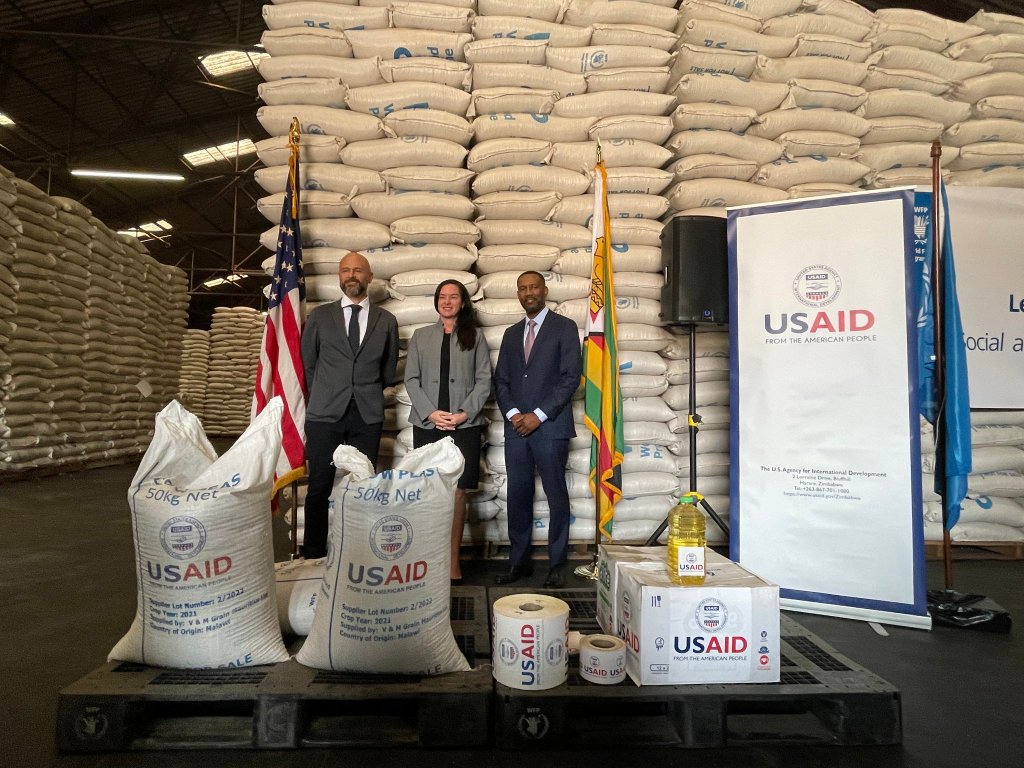
In a bid to achieve food security in rural Zimbabwe, United States Agency for International Development (USAID) have contributed US$36.7 million to the United Nations World Food Programme’s (WFP) lean season response at the peak between Ocrober and March next year and this was announced at WFP warehouse in Harare.
The warehouse is stored with cereals, pulses and vegetables that will be distributed to vulnerable people in the rural Zimbawe and this was made possible by the American people.
In a year marked by COVID-19, climatic shocks, food and fuel price hikes, the contribution will help WFP provide assistance to some 700,000 people in eight districts in Zimbabwe: Bikita, Buhera, Chivi, Hwedza, Mangwe, Mt. Darwin, Mudzi and Nkayi.
To cope during the lean season – the period between household food stock depletion and the next harvest – rural Zimbabweans often reduce the number of quality meals consumed daily and borrow or sell their productive assets. Food assistance will help mitigate these negative coping strategies and stop the most vulnerable from sliding further into food insecurity
.
The latest estimates from the Zimbabwe Vulnerability Assessment Committee (ZimVAC) report, coordinated by the Food and Nutrition Council, show that some 3.8 million people will not have enough cereal to eat during the peak of the upcoming lean season. With the contributions from USAID and other donors, WFP will complement the national Food Deficit Mitigation Programme and distribute food in partnership with the Ministry of Public Service, Labour and Social Welfare to 3.8 million people.
“Achieving food security during Zimbabwe’s lean season is always challenging. Geopolitical events on the other side of the world have made it even more so this year. But the United States of America is ready to assist. Today, I am happy to announce US$36.7 million for 2022/23 Lean Season Assistance funding provided by the U.S. Government for the people of Zimbabwe.” said United States Mission chargé d’ Elaine French.
The U.S. Government has also pledged an additional US$9 million towards WFP’s food assistance for assets program in 2023. Through this initiative, WFP will provide lifesaving food in exchange for work on community assets like feeder roads, community gardens, dams and irrigation systems. The community-centered approach also promotes nutrition, gender equality, and social protection.
“WFP and the United States are committed to supporting humanitarian and social assistance for those who need it most in Zimbabwe,” said Roberto Borlini, WFP Head of Programme in the country. “While we will provide short-term assistance during this lean season, we will also continue creating livelihood opportunities, to increase the purchasing power of families, enabling them to meet their food needs,” he added.
The contribution brings the total funding from USAID to WFP activities to US$44.2 million for 2022 said USAID acting mission director Ramses Gauthier. “Looking back to the last five years USAID has contributed over US$300 million to our partners The contributions have enabled to help communities avail food securities and build resilience to shocks.”, he added.
The United States remains the largest bilateral donor of emergency humanitarian assistance in Zimbabwe. Investements like these are critical in building stronger and more robust communities.
 News Sport Online