
By Tendai Chisiri
A historic moment was highlighted in the drive towards movement building on social inclusion in the country as two movements joins hands to address intersectional discrimination.
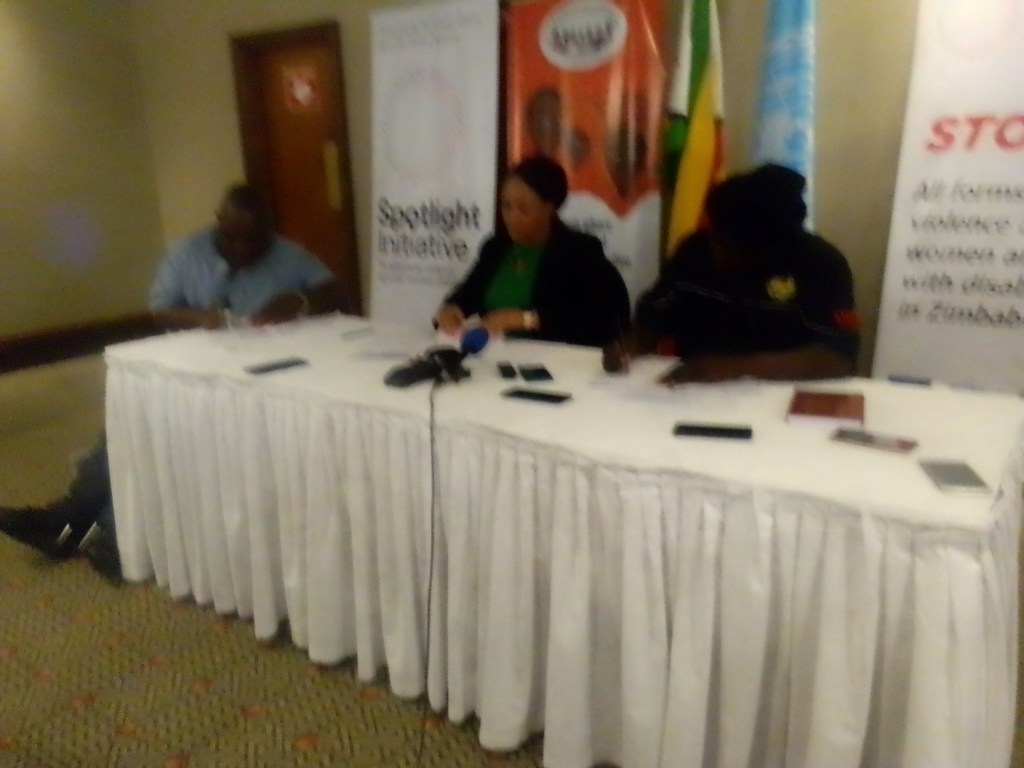
The MoU signed in the Capital city at a hotel on Wednesday emerges from the support of the European Union funded Spotlight Initiative.
A press statement on the MoU says it seeks to build a sustainable transformative coalition for social change between Organisations of Persons with Disabilities (OPDs), Federation of Organisations of Disabled People in Zimbabwe (FODPZ), National Association of Societies for the Care of the Handicapped (NASCOH) and the Women’s movement led by the Women’s Coalition of Zimbabwe (WCOZ).
The MoU was signed in the context that women and girls with disabilities are usually “Left Behind” in gender based violence interventions and yet they face intersecting forms of discrimination at a higher level in comparison with women without disabilities.
OPDs and the Women’s movement in Zimbabwe have decided to establish Memorandum of Understanding (MoU) that would forge a transformative coalition for change in the country.
UNESCO representative Phinith Chanthalangsy Head of Unit Social and Human Science addressing the media said the signing ceremony was made possible by the Spotlight Initiative with the financial support from European Union.
“The issue of gender based violence and the issue of gender norms that are hampering the participation of many persons in this country and we all together would like to address all the barriers preventing many citizens from fully and meaningfully participation in the country’s affairs whether politically, normal developments and also culturally”, he said.
“We feel humbled and privileged to be supporting this coalition building between the two movements” added Chanthalangsy.
The signatories Sally Ncube, WCoZ national coordinator, Leonard Marange FODPZ national director and Henry Masaya acting national director applauded the MoU as a step forward at the press briefing.
Sally Ncube, WCoZ national director said the MoU will help the work of the two movements to be fully implemented.
” Historically the women movement in collaboration with other civil society organisations have been working with marginalised groups and have successfully advocated for no and policy reforms in order to ensure that all forms of violence against women are addressed”, she said.
“OPDs in Zimbabwe have been at the forefront of advocating for disability rights and inclusion with specific focus on intersecting forms of stigma that women and girls with disability face”, added Ncube.
“Given the milestone of these two movements, there is need to build a coalition to address the intersectional discrimination”, she said.
Henry Masaya, NASCOH acting director also concurred on the importance of the MoU.
“This MoU emerges from the support of the European Union funded Spotlight Initiative and seeks to build a sustainable transformative coalition for social change between OPDs, affiliates of NASCOH and women’s movements led by WCoZ”, he said.
“This MoU will create a platform for both movements to undertake joint advocay and capacity building initiatives which include developing corporate disability and gender advocacy and inclusion strategies in the respective movements . Developing partnerships and synergies in existing projects and programmes which are aimed at ending violence against women and girls, he added.
Leonard Marange, FODPZ urged stakeholders to walk the talk as there was need for the MoU to be a living document with a focus on vulnerable groups within the population since women and girls with disabilities often face a double challenge of exclusion and discrimination.
“This MOU challenges stakeholders to give enough attention and focus to disability issues. We should see a departure from a situation whereby the disability sector has been operating in silos with PWDs often allocated to the welfare department. This pact is meant to take on board women and children with disabilities issues. Thus the MOU is a beginning of a long journey towards achieving disability-inclusive development,” he said.
 News Sport Online